
Reproductive Health
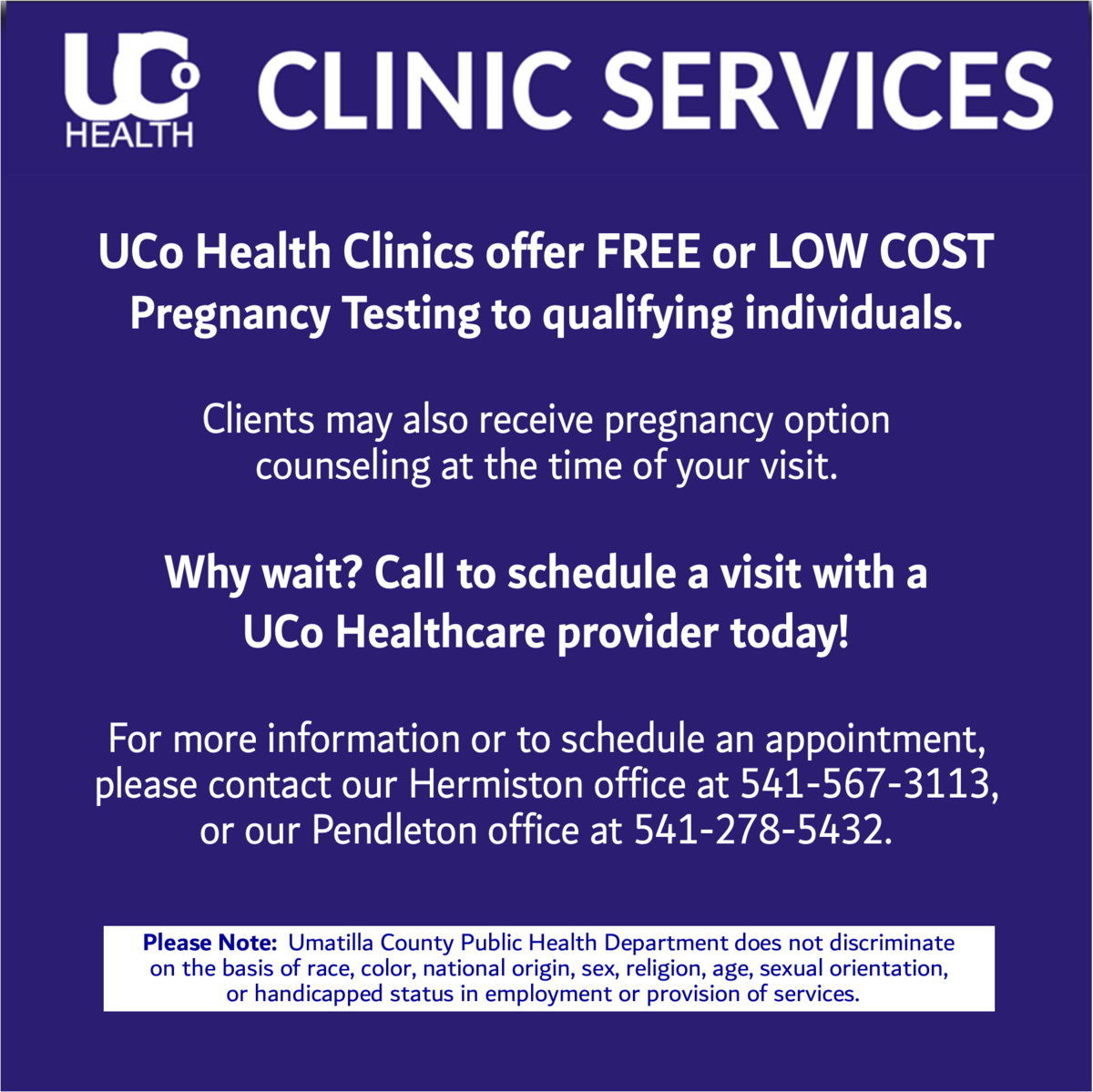
We offer a broad range of birth control methods, information, and referrals to provide individuals with the freedom to choose the number and spacing of their children and to improve the health of our community.
Umatilla County Public Health Department does not discriminate on the basis of race, color, national origin, sex, religion, age, sexual orientation, or handicapped status in employment or provision of services.
Clients may enroll in the Reproductive Health Program that helps to cover the cost of services. Learn More
For concerns with STD testing and treatment, view our Communicable Diseases page.
Prenatal Infection Prevention Information
Facts About Congenital Syphilis (CS):
- Syphilis is a sexually transmitted disease caused by the bacterium Treponema pallidum. If a mother acquires syphilis, she can transmit it to the baby while it is still in the womb.
- CS can cause stillbirth, miscarriage, severe blistering and lesioning of the skin, and severe birth defects involving the brain, spinal cord, and long bones, and damage to vital organs like the liver and spleen.
- In 2018, nearly 9 in 10 CS cases in the U.S. occurred in the Western and Southern states. There was a fourfold increase in CS cases from 2015 to 2019.
- Tips to protect yourself during pregnancy: Use protective barriers like condoms every time you engage in vaginal, oral, and anal sex. Limit your number of sex partners and avoid anonymous sexual encounters. Establish consistent prenatal care early in the pregnancy. Educate yourself to know the signs and symptoms of syphilis. Have open discussions with sex partners about If you test positive, ensure that you receive treatment immediately and notify all sexual partners so they can get tested and treated as well.
Facts about Toxoplasmosis:
- Toxoplasmosis is an infection caused by a microscopic parasite called Toxoplasma gondii, and is typically harmless. However, it can cause serious complications for those who are pregnant or have compromised immune systems.
- Toxoplasmosis can be transmitted by the mother to the unborn baby. While mom may not display any symptoms, severe consequences may arise during pregnancy including preterm birth, stillbirth, miscarriage.
- About 10% of newborns with toxoplasmosis at birth develop one or more of the following: eye infections/inflammation, swollen liver and spleen, seizures, hydrocephalus (fluid on the brain), swollen lymph nodes, abnormally sized heads (either large or small are both possibilities), low birth weight, and skin rash or bruising.
- Without treatment, newborns can have severe consequences later on in life even if they showed no symptoms originally, even 20 to 30 years later. These issues include vision problems, frequent pneumonia, cerebral palsy, seizures, and hearing loss.
- Tips to protect yourself during pregnancy: Wash hands after handling raw meat or produce. Avoid eating raw or under cooked meat and shellfish. Avoid raw or unpasteurized dairy. Peel or wash all raw produce before eating. Use work gloves when gardening and then wash hands when finished. If you have a cat: Ask someone to change the litter box daily. Also ask someone to wash the litter box at least once a week. If you have to do it yourself, wear gloves and wash your hands thoroughly afterwards.
Facts about Vaccine Preventable Diseases:
- Vaccination during pregnancy can allow transfer of essential antibodies to the baby in utero, which can temporarily protect them for several months after birth until they can receive their own vaccines. It is important to have this conversation with your OBGYN if you are planning on becoming pregnant.
- Whooping cough (pertussis) is a disease that can be serious for anyone, but IS particularly dangerous in newborns. Newborns under 2 months of age are too young to get their pertussis vaccination, so it is essential for someone who is pregnant to receive a booster dose of the Tdap vaccine during the third trimester to ensure the baby is protected during the first 2 months of life until they can get their own vaccination.
- Vaccination for flu during pregnancy is highly recommended. Pregnant people have an increased risk of experiencing severe illness from the flu, potentially due to changes in immune, heart, and lung function during pregnancy. This vaccination will also provide cross protection for the baby during the first few months of life.
- If traveling internationally while pregnant, talk to your doctor about additional recommended vaccines to protect you and your baby while traveling to areas where certain communicable diseases are endemic.
Facts about Food-borne Illnesses:
- Food-borne illnesses (“food poisoning”) are acquired by consuming food products contaminated with germs. The most common germs that cause food poisoning include Norovirus, Salmonella, E. coli, Campylobacter, Cryptosporidium, hepatitis A virus, Shigella, Vibrio, and Listeria.
- Statistics: Pregnant people are 10x more likely than the general population to get Listeriosis. Hispanic women tend to have a higher incidence of Listeriosis than non-hispanic women. Salmonella infection results in around 26,500 hospitalizations every year in the U.S.
- Food poisoning is often characterized by abdominal pain and cramping, bloating, fever, nausea, vomiting, diarrhea, and dehydration. Some germs that cause food poisoning can cross the placental barrier. This can then cause harm to the developing baby and greatly affect pregnancy outcomes with risk of preterm birth, miscarriage, stillbirth, or even death of the mother because of immune system changes associated with pregnancy.
- Tips to protect yourself from food-borne illness during pregnancy: Thoroughly wash your hands before, between steps, and after cooking. Keep raw foods separate from ready-to-eat foods. Avoid raw or unpasteurized dairy products like queso fresco. Do not consume raw eggs. Do not eat raw fish like in sushi. Thoroughly cook your raw meat and use a meat thermometer if needed. Avoid cold hot dogs and lunch meat, instead reheat them to a steaming hot temperature. Peel or wash all raw produce before eating. Store perishable foods safely. Pay attention to expiration dates. Plan ahead and thaw frozen food in the refrigerator rather than leaving it out at room temperature. Thoroughly clean cooking utensils and counter space before, between steps, and after cooking.
Facts about Chemical Poisoning:
- Chemical toxicity can be acquired by consuming foods or coming in contact with products that contain or are contaminated with high levels of toxic metals and compounds. The most common products and foods with high levels of toxic compounds include cigarettes which contain benzene, arsenic, and formaldehyde, wood treating products that contain arsenic, aerosol cleaners and air fresheners that contain phthalates (often listed as “fragrance” on ingredients list), some insect repellent ingredients, and high mercury variety seafood.
- Severe complications can arise if high levels of toxic chemicals are in the blood during pregnancy. Complications include low birth weight, miscarriage, reduced infant head and chest size, poor mental development, organ damage, and reproductive development issues. In adults and children, damage to the brain, lungs, liver, and kidneys, fragile bones, gut malabsorption issues, increased blood pressure, and several forms of cancers have been observed.
- Tips to protect yourself from chemical toxicity during pregnancy: AVOID TOBACCO PRODUCTS! Choose low mercury seafood like salmon and shrimp over high mercury types like fresh tuna. Avoid wood varnish fumes. Apply nail polish in a well-ventilated area. Avoid using high fragrance aerosolized cleaning products and air fresheners. Only use EPA-registered insect repellents.
Contact Us
Pendleton Office:
541-278-5432
Hermiston Office:
541-567-3113
After Hours Emergencies:
541-966-3651